
**The ADM238LJR: A Comprehensive Technical Overview and Application Guide**
In the realm of industrial automation, telecommunications, and embedded systems, robust and reliable data transmission is paramount. The **ADM238LJR**, a high-speed, 5V powered RS-232/V.28 transceiver from Analog Devices, stands as a critical component for enabling communication across potentially noisy environments. This article provides a detailed examination of its architecture, key features, and practical application guidance.
**Architectural Overview and Key Specifications**
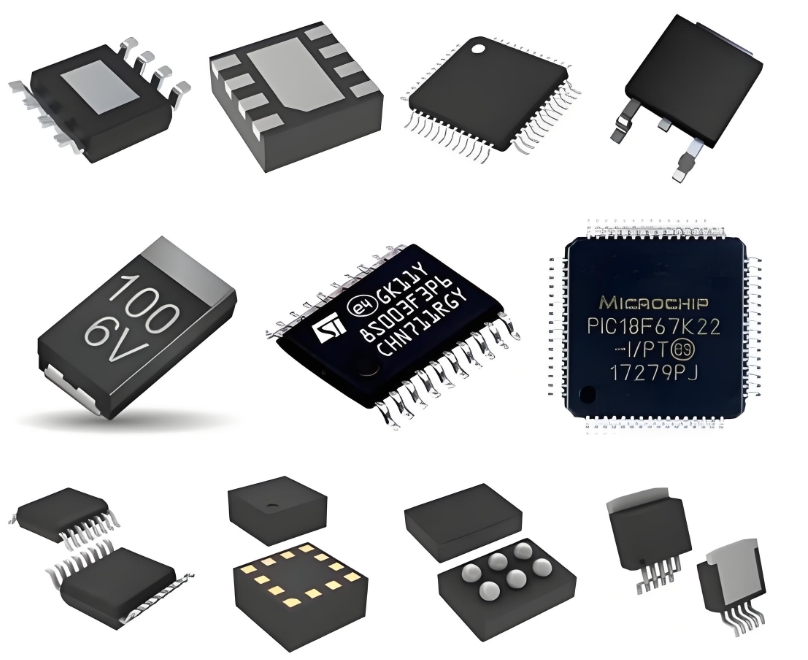
The ADM238LJR is a complete serial port solution in a single 16-pin SOIC package. It integrates a **charge-pump DC-to-DC converter**, which elegantly generates the necessary ±10V RS-232 voltage levels from a single +5V power supply. This eliminates the need for costly and bulky external dual power supplies, simplifying board design and reducing the overall bill of materials.
Its core functionality comprises **three drivers and five receivers**, a common configuration that supports a standard serial port with handshaking lines (e.g., RTS, CTS, DTR, DSR, DCD). Key performance specifications that define its operational excellence include:
* **Data Rate:** Capable of operating at a **maximum data rate of 250 kbps**, ensuring compatibility with high-speed communication protocols.
* **ESD Protection:** Boasts robust **±15 kV ESD protection** on all transmitter outputs and receiver inputs (per IEC 61000-4-2). This is a crucial feature for safeguarding the IC and the system behind it from electrostatic discharge events during handling and operation.
* **Low Power Consumption:** The charge-pump circuitry is designed for efficiency, and the device features a low-power shutdown mode that reduces supply current to microamp levels, making it suitable for power-sensitive applications.
**Application Circuit and Design Considerations**
Implementing the ADM238LJR is straightforward. The external component requirement is minimal, typically limited to **five small 0.1 µF capacitors** for the charge-pump and charge-storage functions. Proper layout is critical for optimal performance:
1. Place these capacitors as close as possible to the designated pins on the IC to minimize parasitic inductance and ensure stable charge-pump operation.
2. Use a ground plane to provide a low-impedance return path and shield against noise.
3. For long cable runs or exceptionally noisy environments, consider using shielded cables with the shield grounded at the host end.
The device is commonly used to interface a **Controller Area Network (CAN)** bus controller or a UART in a microcontroller with an RS-232 network. For example, the transceiver converts the logic-level Tx output from a UART to an RS-232 voltage level for transmission and translates the incoming RS-232 signal on the Rx line back to a logic-level signal for the UART to process.
**Common Use Cases**
* **Industrial Control and Automation:** Programming ports (PG/MPI) on PLCs, communication with motor drives and HMIs.
* **Networking Equipment:** Console management ports for routers, switches, and firewalls for configuration and diagnostics.
* **Point-of-Sale (POS) Systems:** Interfacing with legacy peripherals like receipt printers and magnetic stripe readers.
* **Embedded Systems Debugging:** Providing a standard serial console for system setup, monitoring, and firmware updates.
**ICGOODFIND**
The ADM238LJR is a quintessential example of a highly integrated and robust interface solution. Its **all-in-one design with ESD protection**, ability to operate from a single 5V supply, and compliance with the RS-232 standard make it an exceptionally reliable and engineer-friendly choice for modern digital systems that must communicate with the analog world of serial data transmission.
**Keywords:**
1. **RS-232 Transceiver**
2. **ESD Protection**
3. **Charge-Pump Converter**
4. **Single 5V Supply**
5. **Data Communication**

