
**The AD2S99BPZ: A Comprehensive Guide to the Resolver-to-Digital Converter**
In the realm of precision motion control, robotics, and high-reliability industrial systems, the accurate measurement of angular position is paramount. At the heart of many such systems lies a critical component: the **resolver-to-digital converter (RDC)**. The **AD2S99BPZ**, a product of Analog Devices' technological prowess, stands as a premier solution in this category, designed to interface directly with a resolver and deliver high-accuracy digital position and velocity data.
**Understanding the Resolver and the Need for Conversion**
A resolver is an analog sensor that outputs signals indicative of the angular position of a rotor. It is renowned for its **robustness, simplicity, and exceptional performance** in harsh environments—resistant to shock, vibration, extreme temperatures, and contaminants. Its outputs are typically two analog voltages: a sine wave and a cosine wave, whose amplitudes are modulated by the sine and cosine of the shaft angle.
However, modern control systems operate in the digital domain. This creates a fundamental need to translate the resolver's analog signals into a precise digital representation. This is the exact function of the AD2S99BPZ.
**Key Features and Technical Capabilities of the AD2S99BPZ**
The AD2S99BPZ is a monolithic integrated circuit that serves as the interface between a resolver and a digital processing unit. Its architecture is built around a **Type II tracking loop**, which is renowned for its ability to provide continuous position data with zero latency and high noise immunity.
Some of its most salient features include:
* **High Resolution and Accuracy:** It supports **10-bit, 12-bit, 14-bit, and 16-bit resolution** settings, allowing designers to choose the optimal balance between speed and precision for their application. This enables incredibly fine angular measurement.
* **Integrated Excitation Source:** The chip contains an on-board **sine wave oscillator** that generates the reference signal to excite the resolver's primary winding. This eliminates the need for an external oscillator, simplifying system design and reducing component count.
* **Programmable Frequency:** The excitation frequency is user-programmable, typically from 2 kHz to 20 kHz, providing flexibility to interface with a wide range of standard resolvers.
* **Velocity Output:** Beyond absolute position, it also provides a digital velocity output, which is crucial for implementing advanced closed-loop control systems requiring speed feedback.
* **High Noise Immunity:** The device's synchronous demodulation technique is inherently resistant to the noise and voltage offsets commonly found in electrically noisy industrial environments.
**Typical Application and System Integration**
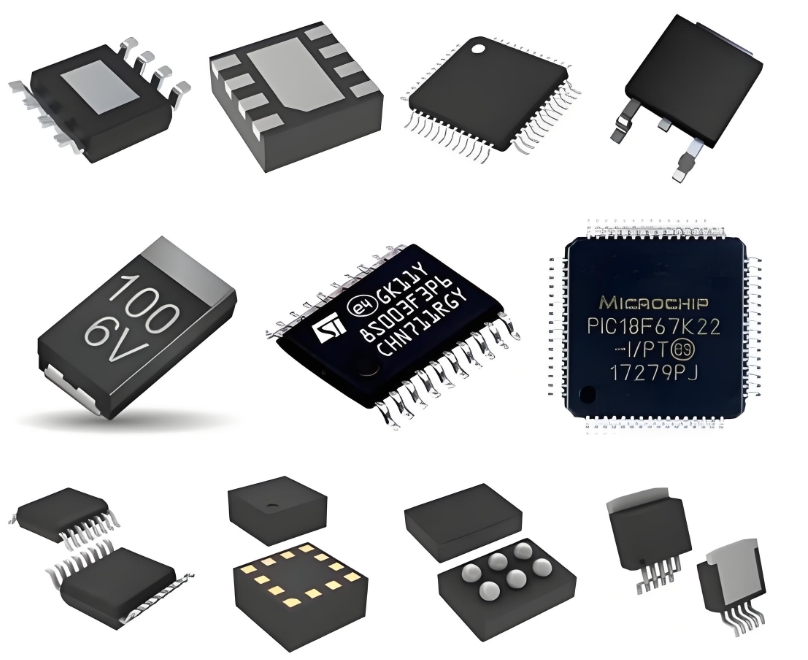
In a typical setup, the AD2S99BPZ is placed between the resolver and a microcontroller or DSP (Digital Signal Processor). The integrated oscillator drives the resolver. The sinusoidal outputs (SIN and COS) from the resolver's secondary windings are fed back into the converter. The device then processes these signals, continuously closing its internal tracking loop to output a parallel digital word representing the shaft angle. It also provides critical monitoring signals, such as **Loss of Signal (LOS)** and **Degradation of Signal (DOS)**, which are essential for functional safety diagnostics.
**Why Choose the AD2S99BPZ?**
This converter is selected for applications where **reliability and precision cannot be compromised**. It is a cornerstone technology in:
* Aerospace and Defense (flight control surfaces, antenna positioning)
* Industrial Automation (robotic arm control, CNC machines)
* Advanced Automotive Systems (electric power steering, hybrid/electric vehicle motor control)
* High-performance Servo Drives
Its ability to operate flawlessly in conditions where optical encoders might fail makes it the preferred choice for mission-critical systems.
**ICGOODFIND**
The AD2S99BPZ is far more than a simple data converter; it is a complete, integrated solution for bridging the robust world of analog resolvers with the precise demands of digital control. Its combination of high resolution, integrated excitation, and proven tracking architecture makes it an indispensable component for engineers designing systems that must perform with utmost accuracy and reliability in the most challenging environments.
**Keywords:**
Resolver-to-Digital Converter (RDC)
Angular Position
Tracking Loop
Integrated Oscillator
High Resolution

