
The HMC232 is a highly integrated, GaAs InGaP Heterojunction Bipolar Transistor (HBT) **MMIC Fractional-N Phase-Locked Loop (PLL) with an integrated VCO** from Analog Devices. Designed to address the demanding requirements of modern wireless communication systems, this component is a cornerstone for generating stable, low-noise local oscillator (LO) signals in a compact form factor. This article delves into its internal architecture, critical performance specifications, and typical application circuits.
**Architecture and Internal Block Diagram**
The architecture of the HMC232 is a testament to high levels of integration. At its core, the IC combines several key functions that traditionally required multiple discrete components. The primary building blocks include:
* **Integrated Voltage-Controlled Oscillator (VCO):** The chip contains a fundamental VCO with a very wide tuning range. This eliminates the need for an external resonator or varactor tuning circuit, significantly simplifying board design and saving space.
* **Fractional-N PLL Synthesizer:** This is the brain of the device. The **fractional-N architecture** allows for very fine frequency resolution—often in the sub-Hertz range—without compromising phase noise performance or switching speed. This is crucial for modern standards like 5G and satellite communications that require precise channel spacing.
* **High-Performance Phase Frequency Detector (PFD) and Charge Pump:** These components work together to generate the correction signal that locks the VCO to the desired frequency. The HMC232 features a high-frequency PFD, enabling higher loop bandwidths and better noise suppression.
* **Programmable RF Output Divider:** This block allows the single VCO to generate a wide range of output frequencies. By dividing the VCO's fundamental frequency, the IC can cover multiple frequency bands with a single device.
* **Serial Control Interface (SPI):** The entire device is controlled via a standard 3-wire Serial Peripheral Interface (SPI). This digital interface allows a microcontroller or FPGA to easily program all register settings, including output frequency, output power, and various operational modes.
**Key Specifications and Performance Metrics**
Understanding the HMC232's datasheet is key to successful implementation. Its standout specifications include:
* **Extremely Wide Frequency Range:** The HMC232 is renowned for its **exceptionally wide operating bandwidth**, typically covering from 6.8 GHz to 13.6 GHz directly from the chip. This makes it incredibly versatile for a multitude of C-band, X-band, and Ku-band applications.
* **Outstanding Phase Noise:** A critical metric for any LO, the HMC232 delivers **excellent phase noise performance** (e.g., -110 dBc/Hz at 100 kHz offset for a 10 GHz carrier), which directly translates to better receiver sensitivity and lower transmitter EVM in communication links.
* **Fine Frequency Resolution:** Thanks to its fractional-N divider, it achieves **sub-Hertz frequency steps**, enabling precise channel selection and fine-tuning for calibration purposes.
* **Low Power Consumption:** Despite its high performance, the device is designed for efficiency, typically operating from a single +5V supply and drawing a modest current, making it suitable for portable and power-sensitive equipment.
* **High Output Power:** It provides a robust **typical output power of +12 dBm**, which is often sufficient to drive mixers and subsequent amplifier stages directly, reducing the need for additional gain stages.
**Application Circuits and Design Considerations**
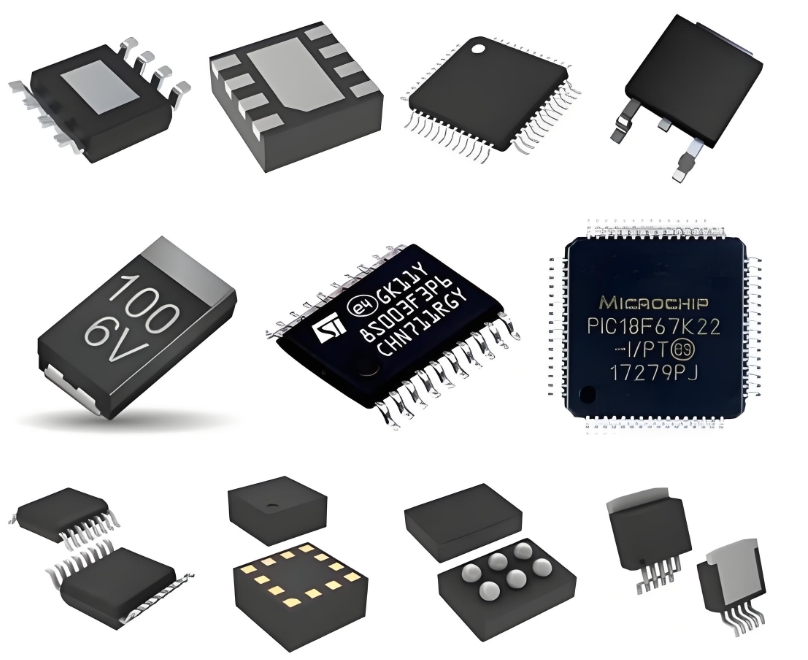
The HMC232's value is fully realized in its application circuits. A typical implementation involves a relatively simple layout:
1. **Basic Loop Filter Design:** The main external component required is a passive **loop filter**. This filter, typically a 2nd or 3rd-order low-pass network, is crucial as it determines the PLL's dynamic performance—its locking speed, reference spur levels, and phase noise. The filter components (resistors and capacitors) must be selected based on the desired loop bandwidth and phase margin, using the formulas provided in the datasheet.
2. **Power Supply Decoupling:** Excellent high-frequency decoupling is non-negotiable. Multiple **decoupling capacitors** (from pF to μF values) should be placed as close as possible to the power supply pins to minimize noise and prevent spurious signals from degrading performance.
3. **Clean Reference Oscillator:** The performance of the entire PLL is anchored to the external **reference oscillator**. A low-noise, stable crystal oscillator (XO) or temperature-compensated crystal oscillator (TCXO) is essential to ensure the integrated VCO achieves its specified phase noise.
4. **SPI Control Lines:** The SPI control lines (SDATA, SCLK, SEN) should be routed carefully to avoid digital noise coupling into the sensitive RF sections. Using series termination resistors can help clean up the digital signal integrity.
Common applications for the HMC232 include:
* **Point-to-Point and Point-to-Multi-Point Radios**
* **VSAT and Satellite Communication Terminals**
* **Military and Aerospace Electronics (Radar, EW Systems)**
* **Microwave Test and Measurement Equipment**
ICGOODFIND: The HMC232 stands as a premier solution for high-frequency synthesis, masterfully integrating a VCO and fractional-N PLL to deliver unparalleled bandwidth, exceptional phase noise, and fine resolution in a single package. Its simplified design footprint empowers engineers to develop advanced LO systems for the most demanding wireless infrastructure and aerospace applications with reduced component count and development time.
**Keywords:**
1. **Phase-Locked Loop (PLL)**
2. **Voltage-Controlled Oscillator (VCO)**
3. **Phase Noise**
4. **Frequency Synthesizer**
5. **SPI Interface**

